Weaving Pride: The Ghanaian Smock’s Renaissance in Culture and Style
-

- March 2, 2026

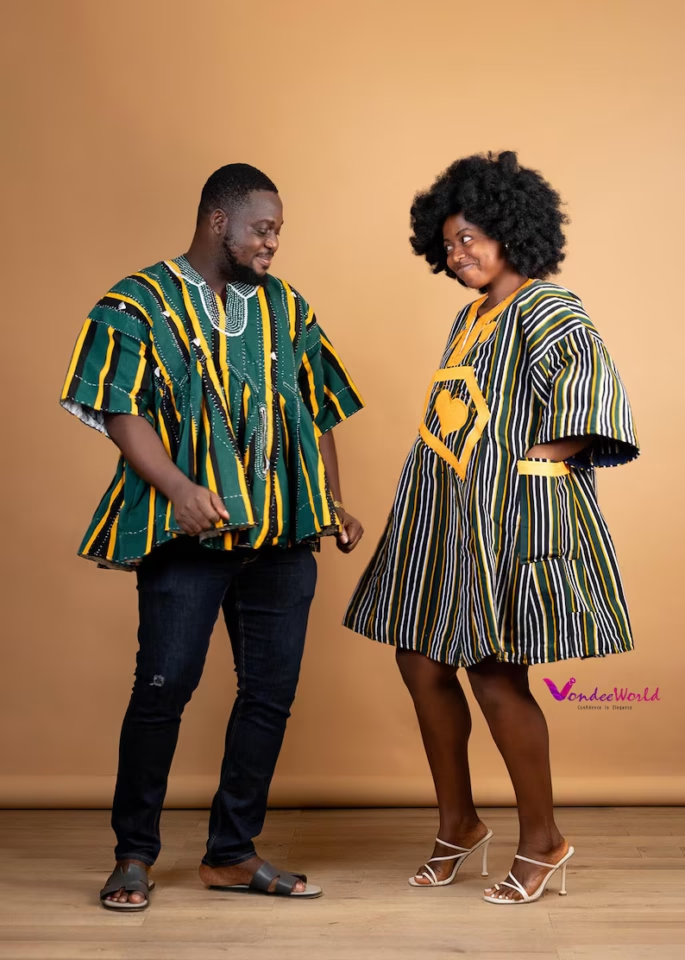
The Ghanaian smock, known locally as the fugu in the northern regions and batakari among some southern communities, stands as one of Ghana’s most enduring sartorial icons. This hand-loomed garment — a loose, tunic-like top made from strips of cotton woven on narrow looms and sewn together — has long been a symbol of heritage, identity, and craftsmanship. While its roots lie in the Northern Savannah, today the smock transcends region and class, worn by presidents, chiefs, creatives, and everyday Ghanaians alike.
In early 2026, the Ghanaian smock found itself at the center of an unexpected cultural reckoning that spotlighted its relevance both at home and abroad. During a state visit to Zambia, Ghana’s President John Dramani Mahama wore a traditional fugu — as leaders of previous generations regularly have done — only to become the subject of online banter from some observers who likened the garment to a “blouse.” Ghanaians responded not with embarrassment but with pride: social media lit up with defenses of the smock as a potent badge of national heritage, driving a surge in public interest and sales for artisans across Ghana.
Recognising this groundswell of support, Ghana’s government officially declared every Wednesday as “Fugu Day,” a weekly celebration encouraging citizens to wear the traditional attire as a mark of cultural pride. Introduced by the Ministry of Tourism, Culture and Creative Arts, the initiative not only affirms identity but also seeks to bolster local textile production and support livelihoods in the hand-woven garment sector.
The smock’s history stretches back centuries, rooted in the weaving traditions of Northern Ghana’s Dagomba, Mamprusi, and related communities. Originally practical attire for hunters and everyday life in the savannah, the garment evolved into an emblem of leadership and spiritual strength. Its broad shoulders and flaring sides were designed for freedom of movement, while certain dye colours — indigo for wisdom, black for protection — carried symbolic meaning. In earlier times, some smocks even incorporated spiritual elements believed to offer protection in battle or ritual.
By the mid-20th century, the smock had earned a place on the national stage when Ghana’s first president, Kwame Nkrumah, wore it during independence celebrations in 1957, cementing its status as a garment of dignity and national pride.
Today, the Ghanaian smock occupies a fascinating space between tradition and modernity. Once primarily ceremonial attire, it has become a staple of everyday fashion across demographics.
The traditional fugu top is more often associated with men, who sometimes wear trousers and a hat in matching material, but women also wear a version of it, which can be styled longer or as a dress.
For many, wearing a smock is a statement of belonging and pride; for others, it’s a way to connect with ancestry while navigating modern life. Trusted weavers report that demand now spans weddings, funerals, work, and social events — far beyond the cultural festivals and state functions where it might once have been confined.
The resurgence of interest in the Ghanaian smock points to a broader cultural affirmation: that tradition and modernity can not only coexist but enrich one another. As Ghana asserts its heritage on the global stage, the smock stands as a wearable symbol of resilience, creativity, and identity. Its weekly celebration on Fugu Day is more than a fashion moment — it’s a reaffirmation of what it means to be Ghanaian in a rapidly changing world.
If the recent spark of national pride continues to inspire innovation, investment, and appreciation, the smock may well become more than a revered national garment. It might become, as President Mahama has suggested, a global fashion ambassador for Ghana — one stitch at a time.
In the hands of artisans and the hearts of wearers, the Ghanaian smock’s future is as vibrant as its stripes: rooted in history but ready for reinvention.